What is Entity SEO?
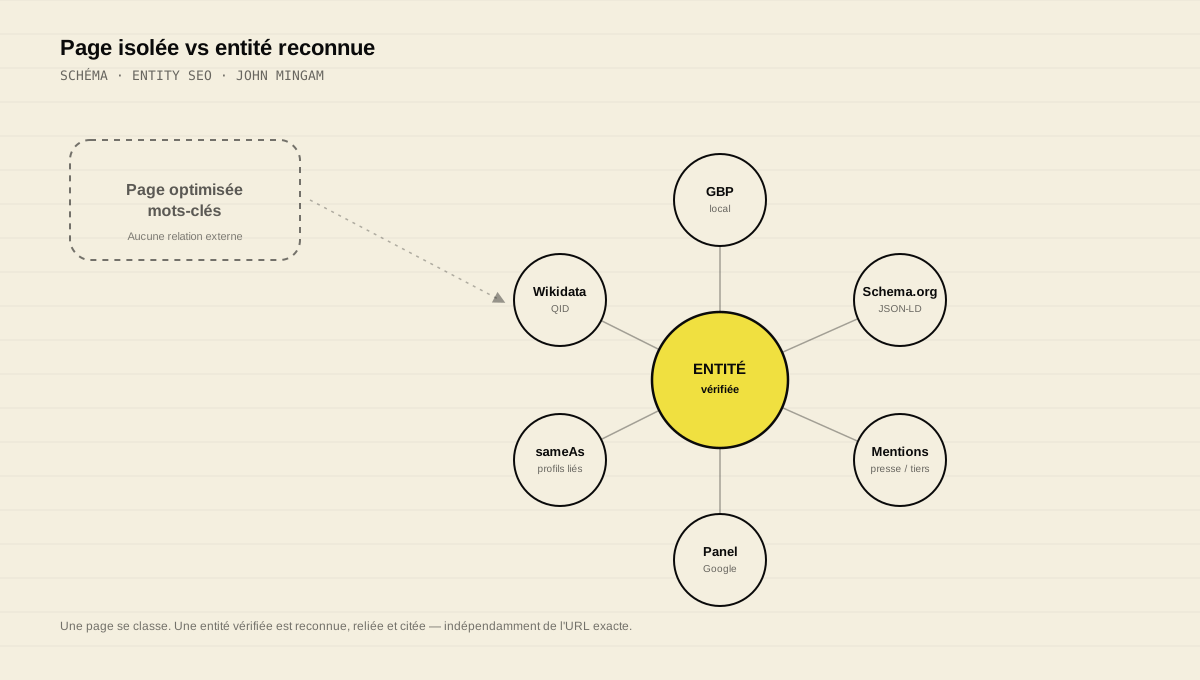
Entity SEO makes the real-world subject behind content easier to identify. That subject may be a company, person, place, service or concept. The work aligns visible information, site architecture, structured relationships and external evidence so systems encounter one coherent identity.
How is it different from keyword SEO?
Keywords describe the words used in a query. Entities describe the things those words refer to. Good optimization needs both: the page must use the audience’s language and make the underlying subject unambiguous.
Is Entity SEO the same as semantic SEO?
They overlap but are not identical. Semantic SEO improves meaning, topical coverage and relationships within content. Entity SEO focuses more specifically on identifying and corroborating the people, organizations, services and places involved.
Does structured data create an entity?
No. JSON-LD helps machines read explicit relationships, but it should reflect visible, supportable facts. An Organization node is useful when its name, URL, people and profiles match the site. Markup is a description layer, not independent proof.
Does a small business need a knowledge panel?
No. The immediate goal is clarity, not a particular Google feature. A small business benefits when search engines correctly associate its services, location, people and trusted profiles, even if no knowledge panel appears.
What should a bilingual business do?
Maintain one organizational identity while creating genuinely useful French and English experiences. Use consistent facts, self-referencing canonicals and reciprocal language annotations. Adapt terminology and examples to each audience instead of publishing mechanically translated filler.
Which tools are useful?
Use a crawler to inventory URLs and canonicals, Search Console to observe indexing and queries, schema validators to inspect syntax, and a spreadsheet or graph to reconcile business facts. Manual verification remains essential: tools can detect inconsistency, but they cannot decide whether a claim is true.
What should be measured?
Track branded search consistency, discovery of author and service pages, qualified organic traffic, correct structured-data eligibility and citations in answer systems. Always record citation tests with their date, prompt and platform because generated answers change.
A useful first step
Create a one-page entity record listing the official name, public name, canonical URL, people, locations, services and authoritative profiles. Compare every major site template and external listing against it. Correct contradictions before expanding the content inventory.